
Connect on WhatsApp
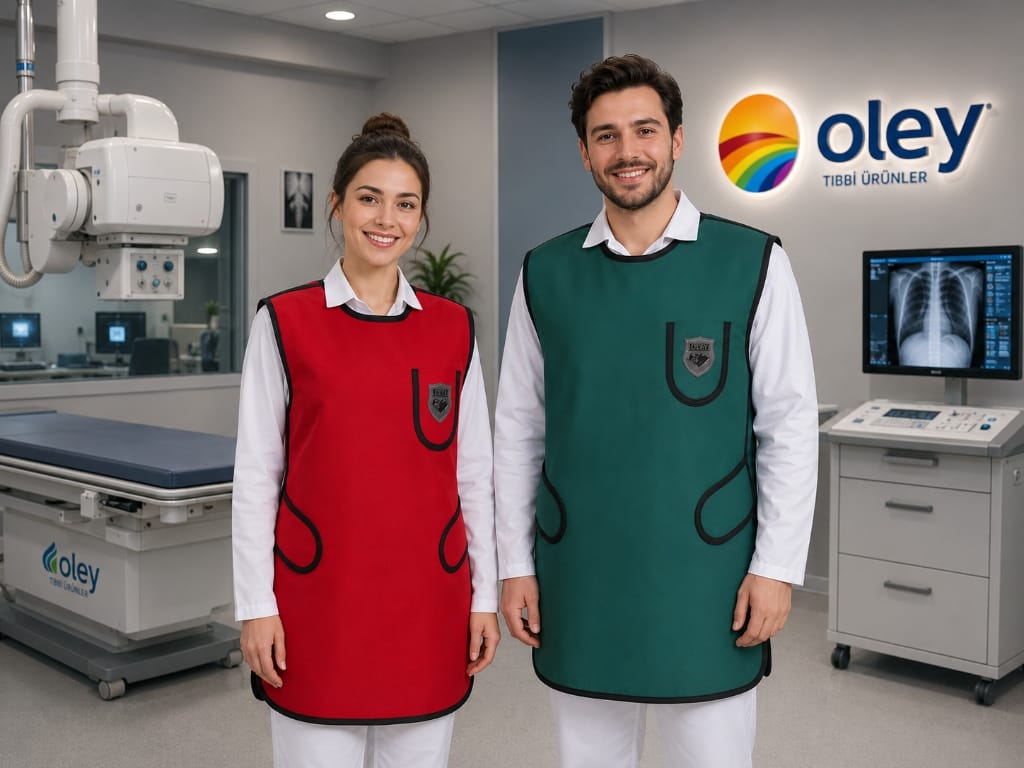
Establishing radiation safety in radiology, cardiology, nuclear medicine, and dental practices depends on certified quality standards. Attenuating garments cannot be used based solely on a 'radiation protective' label; it is a legal requirement that their shielding performance is tested and validated in accredited laboratories.
For detailed information on the regulatory framework and certification requirements for protective equipment, please consult our Lead Apron Guide page.
The IEC 61331-1 standard specifies measurement methods for the attenuation properties of protective materials. Shielding layers used as apron core lining (leaded or lead-free) are tested under various kilovolt (kVp) energy levels, typically ranging from 50 kV to 150 kV. These tests verify the transmission rates and nominal lead equivalency (mm Pb) of the materials.
As a design standard, IEC 61331-3 dictates how much of the user's body must be covered by the protective apparel. For instance, the protective width of a front protective apron must span at least 60% of the chest width and extend from shoulders to below the knees. Full-protection (Series 21) models must guarantee at least 0.50 mm Pb frontal protection while ensuring at least 0.25 mm Pb back protection.
For detailed information on apron designs, cut details, and size charts, it is highly beneficial to visit our Lead Apron Guide page.
Radiation protective clothing falls under 'Category III' (high-risk class) under the EU Personal Protective Equipment (PPE) regulations. Category III certification requires manufacturers to open their production lines to annual audits by independent Notified Bodies and repeat attenuation tests on samples from every production batch. Using aprons that lack CE certification or fall below Category III standards is illegal in medical facilities.
Oley Medical Products fully meets IEC 61331-1/3 and CE Category III standards across all lead apron models. For detailed information on preparing technical specifications and aligning standard-compliant products for institutional procurement, please consult our Lead Apron Guide page and contact our specialist team.