
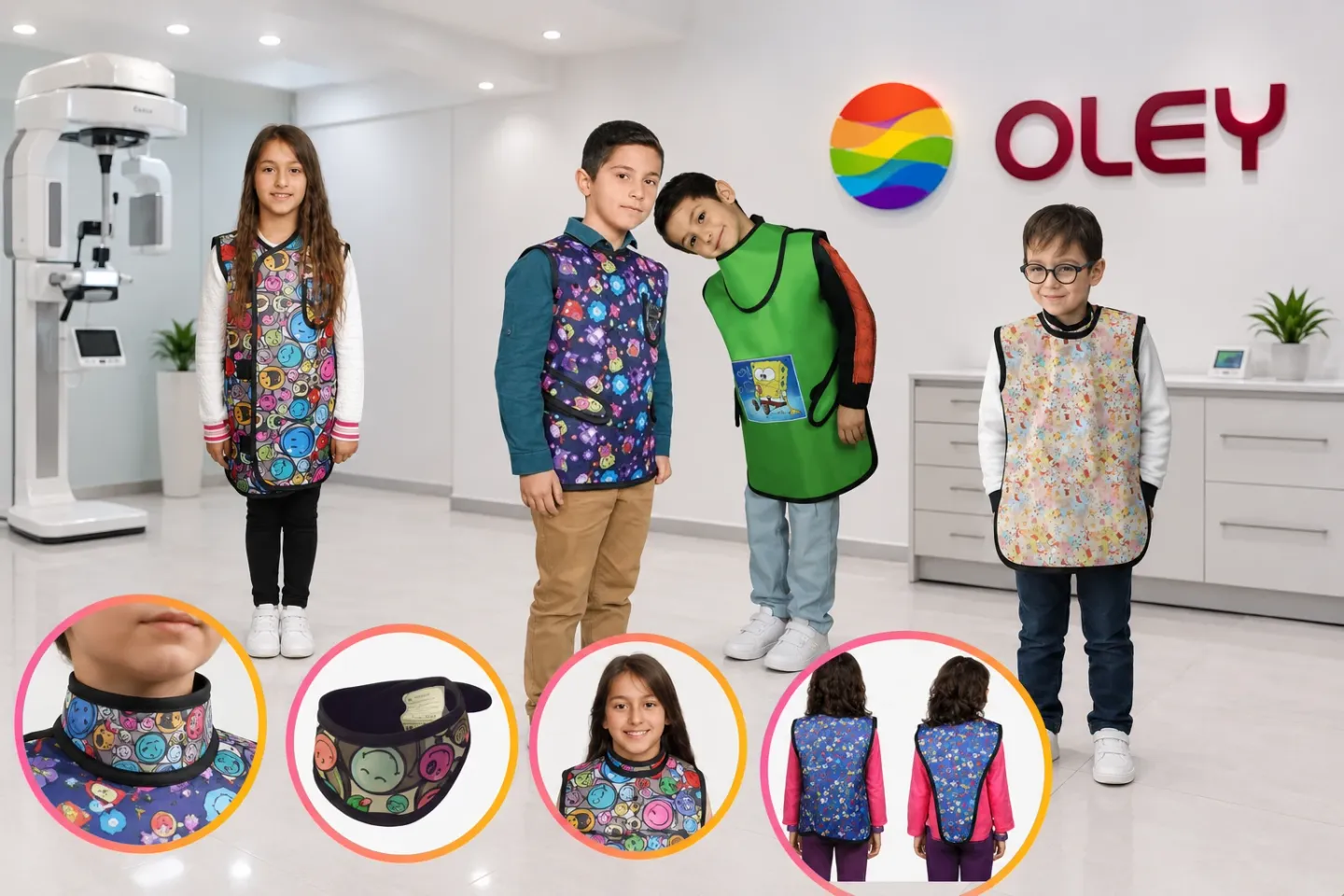
Why are children highly sensitive to radiation?
Children have a much faster cell division rate than adults, and their organs and tissues are still developing. Due to this biological sensitivity, they are several times more susceptible to the effects of ionizing radiation (X-Rays).
In pediatric imaging, to minimize scattered radiation, all sensitive organs outside the target area must be protected. This is where lead or lead-free aprons sized specifically for children are essential.
How to choose the right pediatric apron?
Dressing children in adult aprons causes physical discomfort due to excess weight and leaves safety gaps because of improper fit. Key selection criteria include:
- Sizing charts tailored to children's age and height ranges
- Lightweight protective core materials that protect sensitive skeletal structures (lead-free antimony or light lead)
- Thyroid collars integrated to protect the thyroid gland
- Wide adjustable velcro straps for quick and easy wear
Clinical approaches to pediatric protection
Keeping a child still during X-Rays shortens exposure time and prevents repeats. Designing aprons with bright colors and child-friendly patterns helps reduce hospital anxiety, facilitating the procedure.
At Oley Medical Products, we provide reliable solutions for pediatric health units with child-sized front protection, full protection, panoramic, and periapical aprons.